How to sell e-commerce returns to B2B buyers in India
Sort returns by condition, describe each lot the way buyers check it, set a floor price for each grade and get paid before the stock ships.
Every online brand gets stock back. A customer changes their mind, a parcel is refused at the door, a box arrives with a crushed corner. Most of these units work, and many were never used. They can no longer go back out as new stock, so they sit in a corner of the warehouse while they lose value.
Business buyers will take them if you sort, describe and price them the way those buyers check stock. Here is how, in five steps.
1. Sort returns by condition first
A mixed pallet of returns is hard to price, so buyers offer low to cover what they cannot see. Sort every unit into a grade before you offer anything. Three grades cover most returns:
- Like new. Unused, with all parts and the original box. The box may have been opened.
- Open box. Opened or briefly used, works fully. The packaging may be damaged.
- Used. Works, with visible signs of use.
Keep faulty units out of these lots. If you want to sell them, list them as a separate lot and say plainly that they do not work.

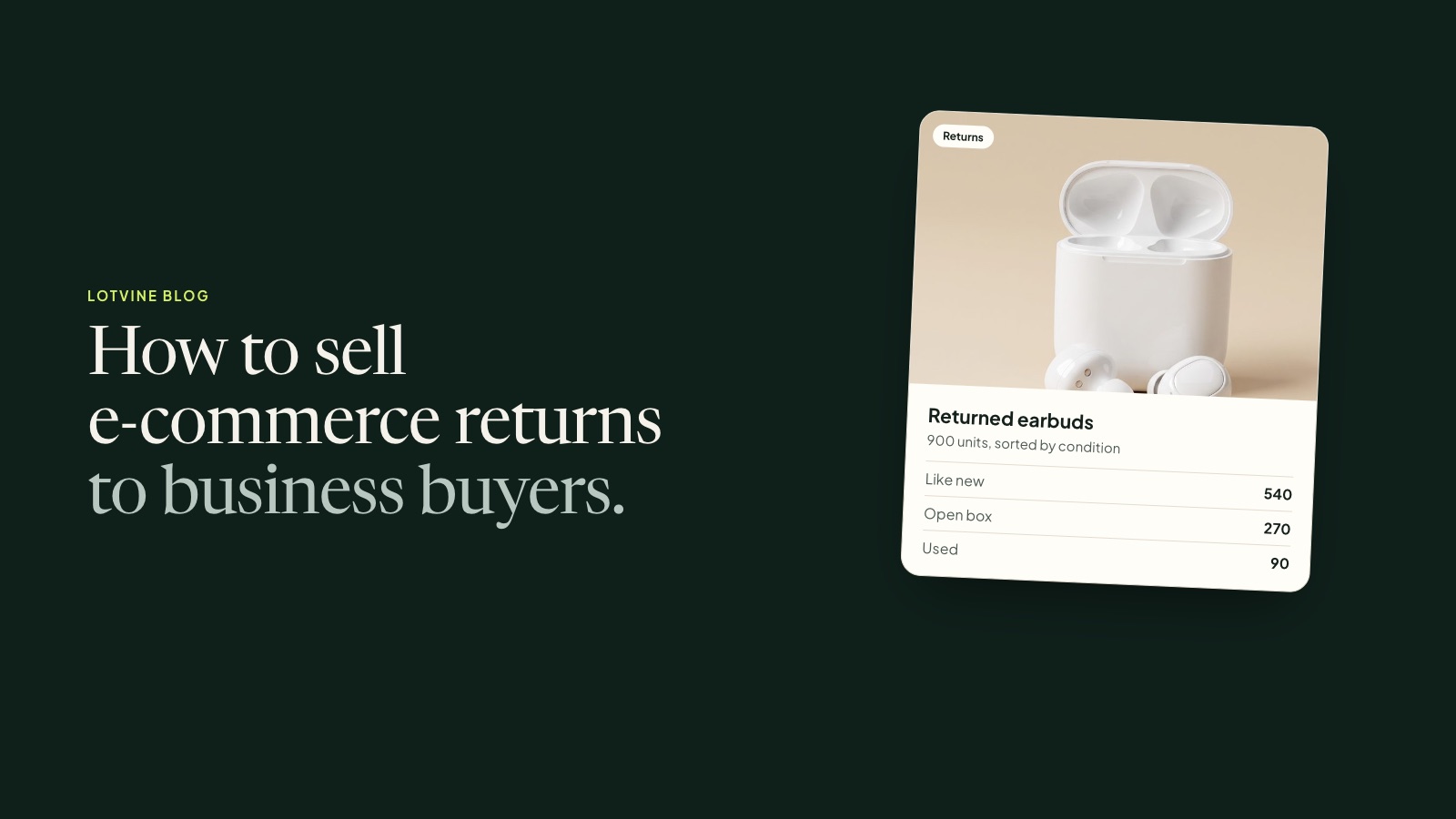
- Like new
- 540 units
- Open box
- 270 units
- Used
- 90 units
- Condition
- As you report it
- Minimum order
- Set per lot
One lot, three grades. Each grade gets its own price.
900 returned earbuds, sorted into like new, open box and used.
2. Describe each lot the way a buyer checks it
Write the listing for someone who cannot see the stock. For each grade, give:
- The condition grade and what it means for this lot
- What is in the box, such as the charger, cable, case and manual
- Quantity in each grade
- Photos of real units from each grade, not catalogue images
- Location of the stock and the minimum order
- Price per unit, or a clear invitation to make an offer
Be exact about condition. A buyer who finds used units in a like-new carton will dispute the order, and settling that takes longer than describing the stock properly in the first place.
3. Set a floor price for each grade
Like-new units are worth more than used ones, so give each grade its own floor price: the lowest price you will accept. Set it before the first offer arrives. If you set one price for all 900 units, either the like-new units go too cheaply or the lot waits for a buyer who wants all three grades.
Let buyers take one grade or several. An online seller may want only the like-new units. A value retailer may take the open-box and used units together.
4. Choose who can buy, and keep the stock away from your own customers
Returns sold cheaply in front of your full-price customers hurt your brand. Decide where each lot can go:
- Buyer types. Online sellers who list open-box stock, value retailers and wholesalers.
- Regions. Towns where you do not sell today, or markets abroad if you allow it.
- Brand name. You can list a lot without naming the brand, and show it only to buyers you approve.
Check every buyer before they see a lot: GST or VAT registration and KYC.
Choose who can buy each grade. Keep it away from your full-price stock.
- Online sellers of open-box stock Open
- Value retailers Open
- Wholesalers Open
- Towns you do not serve today Open
- Your core distributors’ regions Closed
- Stores where you sell new stock Closed
- Brand name in the listing Hidden
- Buyers you have not approved Closed
5. Get paid before the stock ships
Ask for payment in advance, before dispatch. A buyer who is unhappy with the condition of returned stock can hold back payment if they have not paid yet. Taking payment first, and describing the stock exactly, avoids that. Issue a GST invoice for each sale, and keep a record of which buyer took which grade, so you know whom to offer the next batch of returns to.
Where Lotvine fits
Lotvine runs these steps for you. You upload a stock file with the condition of each unit. Lotvine’s AI lists each grade as its own lot on Lotvine Store, applies your floor price and your rules for who can buy, and offers the lots to verified online sellers, value retailers and distributors on WhatsApp, voice calls and email. Buyers pay before dispatch, and we arrange pickup and paperwork. There is no listing fee; you pay a commission only on what sells. See how we sell surplus stock.
Common questions
Who buys e-commerce returns in India?
Online sellers who list open-box stock, value retailers and wholesalers. You can also offer lots in towns where you do not sell today, or abroad if you allow it.
How should I grade returned stock?
Sort every unit into like new, open box or used before you price it. Keep faulty units out of these lots, or list them separately and say they do not work.
Should I sell returns as one lot or by grade?
By grade. Give each grade its own floor price, so buyers can take the units they want and the like-new units do not go at the used price.
Have stock that won't move? We'll show you who would buy it.
Send a stock file. We share a reach plan within 48 hours.